The “Making-Of”
When we think of cutting-edge artificial intelligence, we usually don’t think of 16th-century history. For a series of special exhibition openings in May 2026, we set out to change that. We launched an ambitious, regional tech-heritage project to create three distinct conversational AI Avatars for three different museums in Austria’s beautiful Pinzgau region. All three avatars were built to transport visitors back 500 years to the turbulent era of the Peasants’ War (1525–1526), but each museum chose its own distinct storytelling strategy. Because this was a unified, multi-avatar initiative, our production phase was a fascinating journey. Here is the exclusive “making-of” story of how we brought these three unique characters into the 21st century.
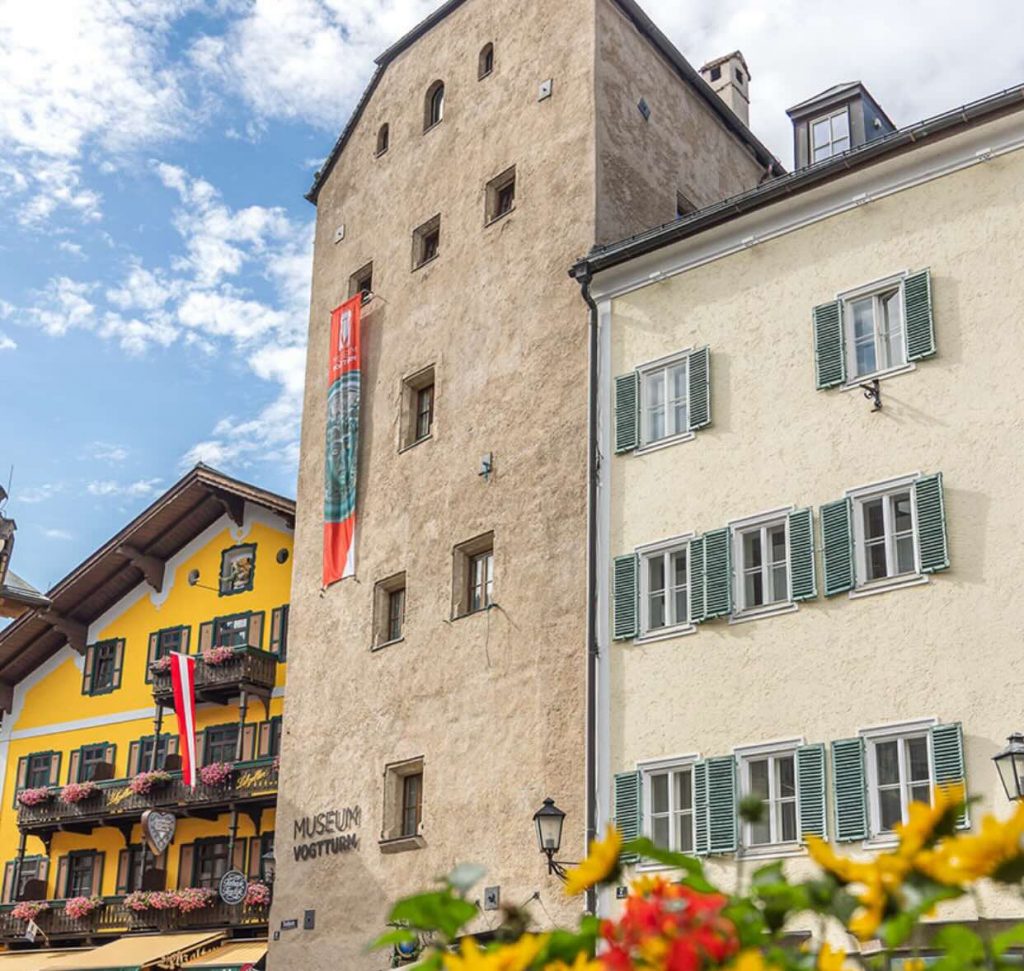
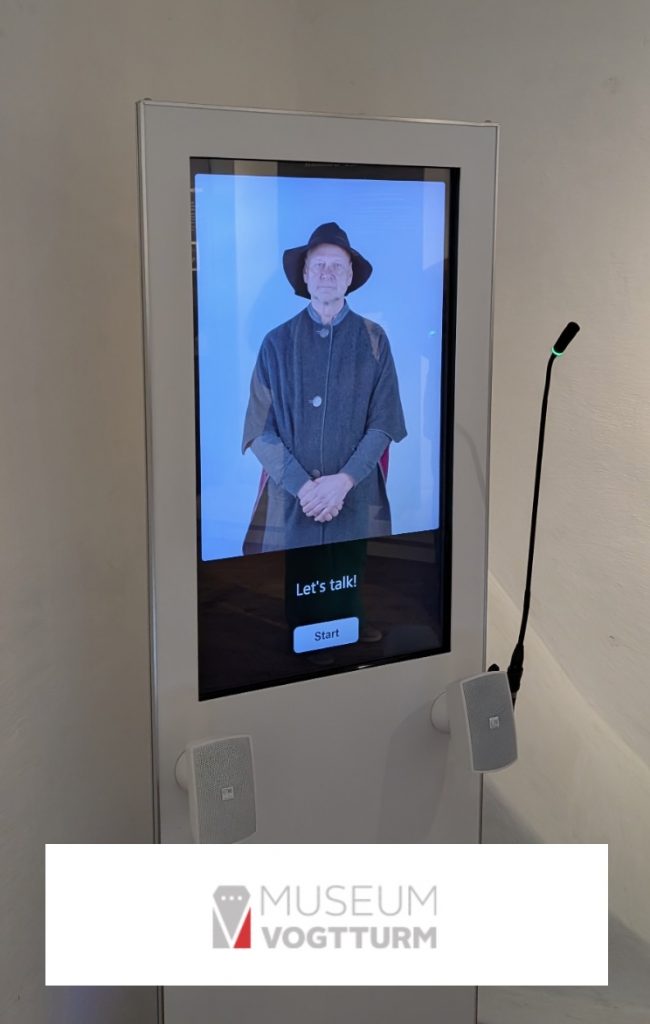
The Vogtturm Museum (Zell am See): Featuring Isidor Kheill (a made up name), the legendary night guard of the Vogtturm, brought to life to spin yarns and share local folklore.
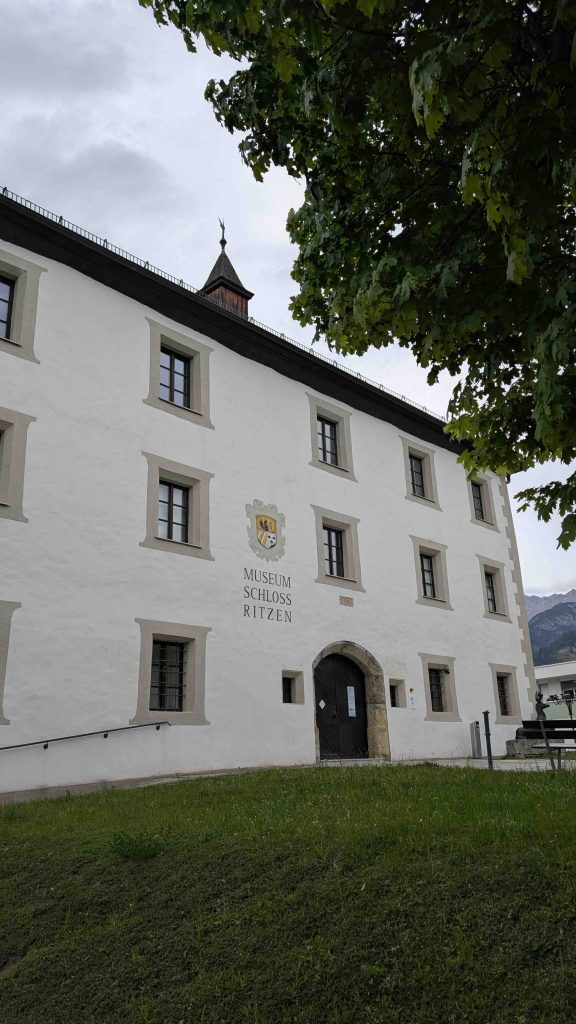
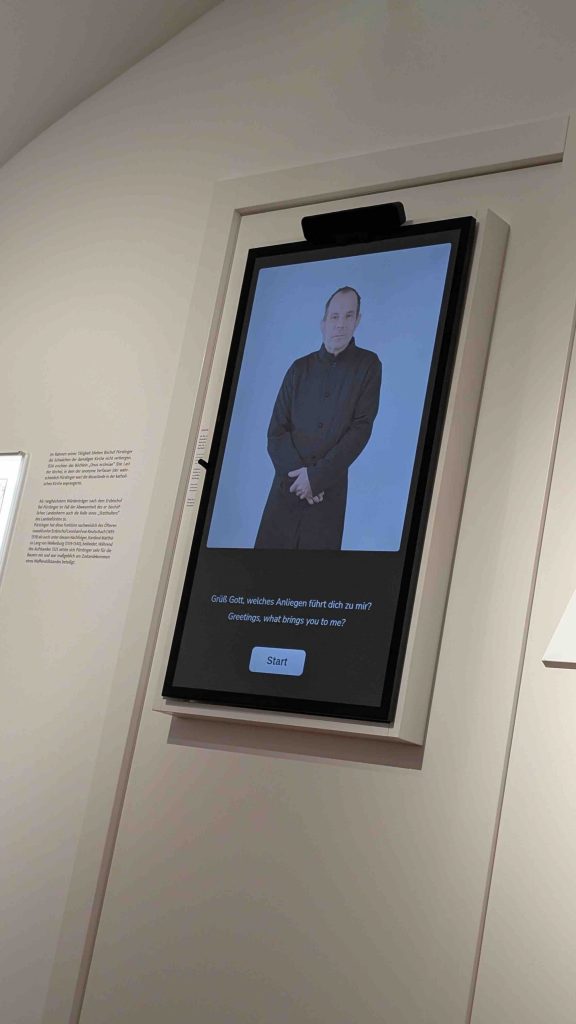
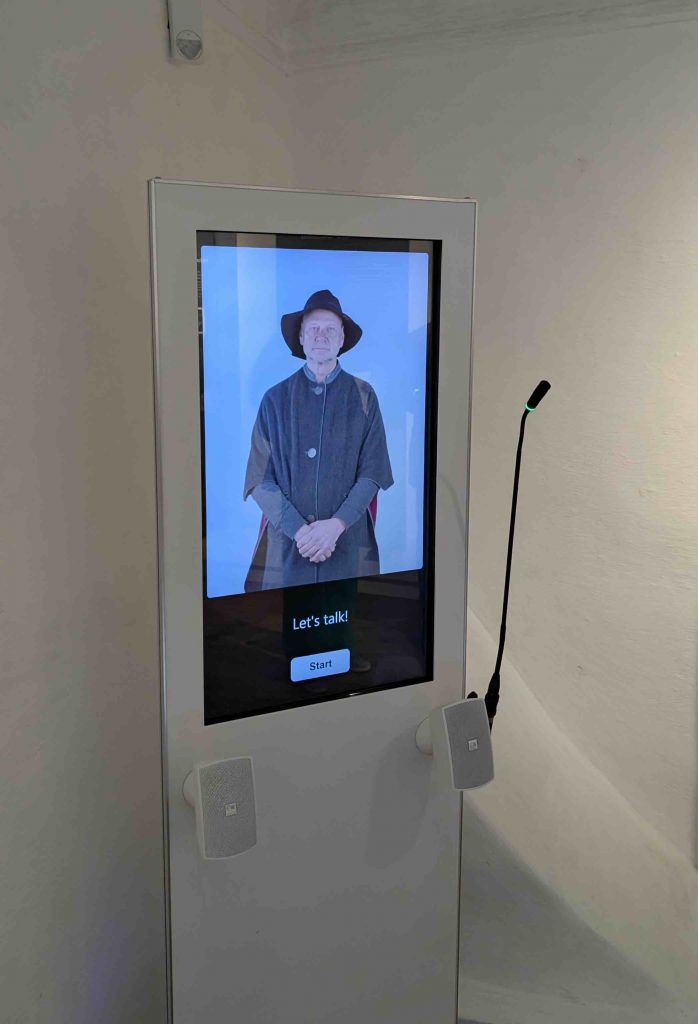
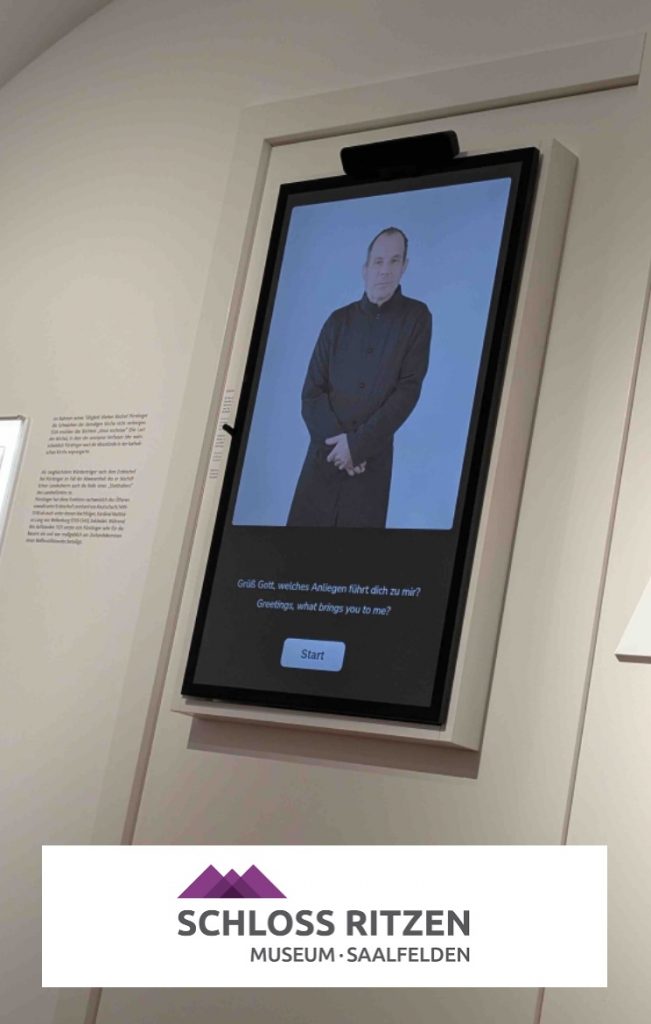
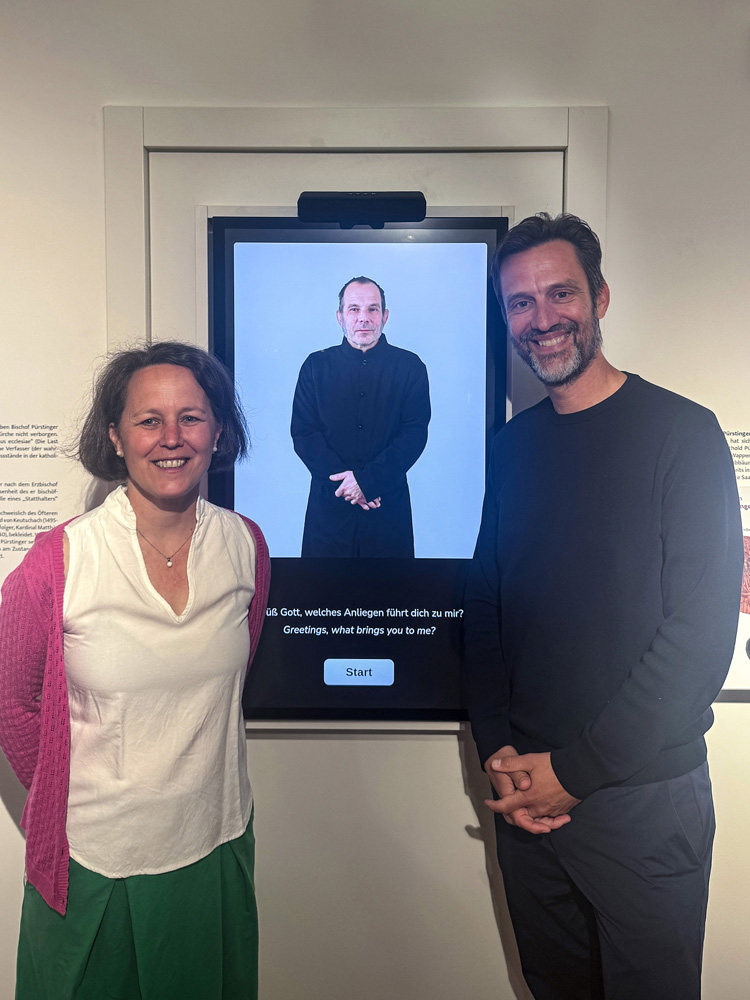
Schloss Ritzen Museum (Saalfelden): Featuring Bishop Berthold Pürstinger, an actual, real-world historical figure of the Peasants’ War, who lived out his later years in Saalfelden
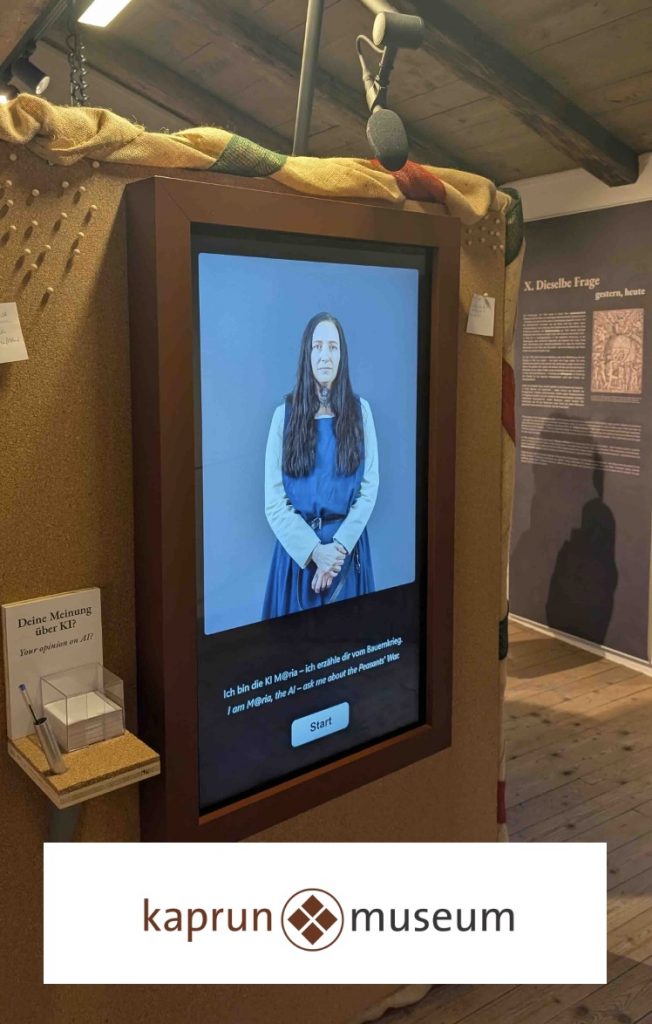
The Kaprun Museum: Featuring Maria, a meticulously crafted historical archetype representing the often-overlooked perspectives of women during the 16th-century uprisings.
Part 1: One Epic Day, Three Actors – The Video Shoot
If you look through our behind-the-scenes pictures and videos (or better yet, when you go visit the museums), the first thing you will notice is a bustling set featuring three different actors in distinct clothing styles from 500 years ago.
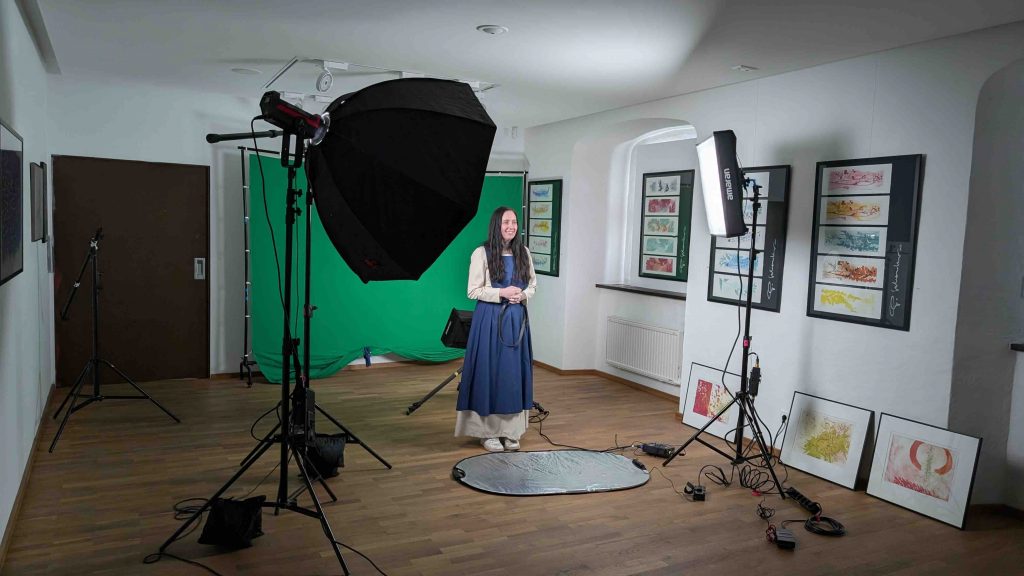
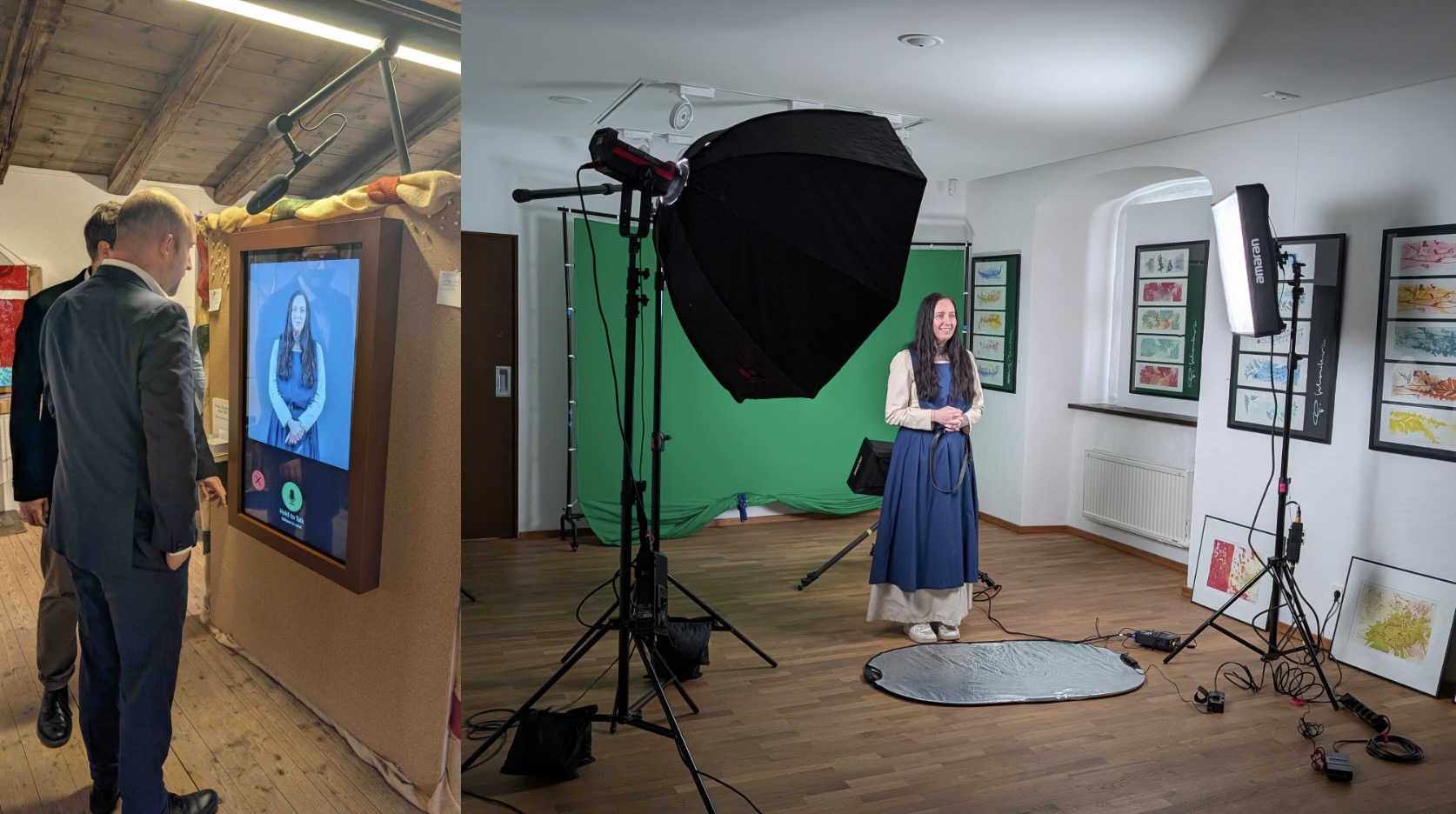
Instead of splitting up the production, we centralized the filming into an intensive, full-day video production shoot. We transformed the atmospheric, historic halls of the Schloss Ritzen Museum into a high-tech film and data-capture studio.
The Technical Setup:
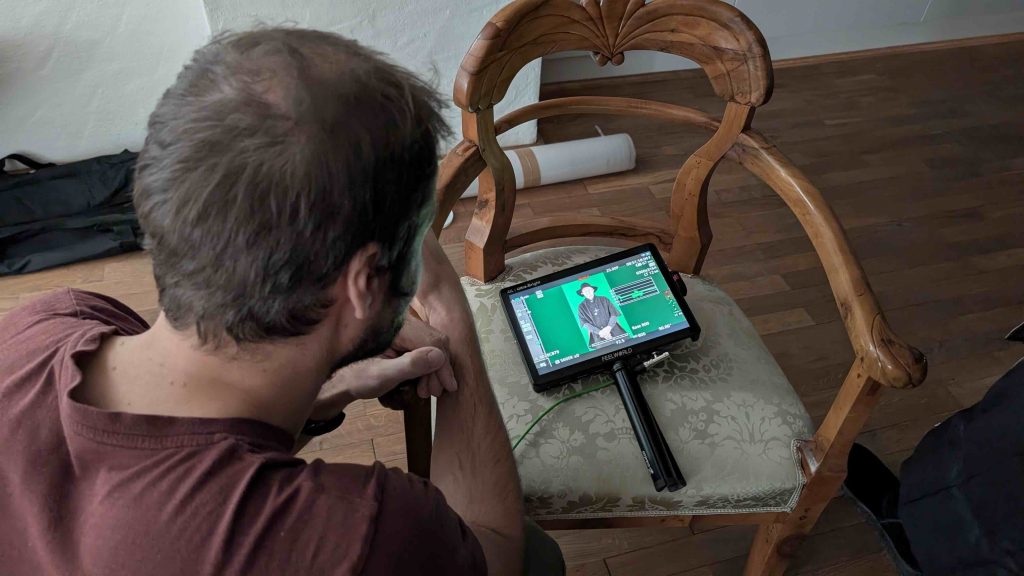
- The Environment: Surrounded by centuries-old museum walls, our production crew erected a green screen backdrop and deployed production-grade camera and lighting equipment.
- The Human Foundation: For a full day, our three actors took turns stepping in front of the lens. They didn’t just recite lines; they spoke directly into the camera to build a comprehensive data profile.
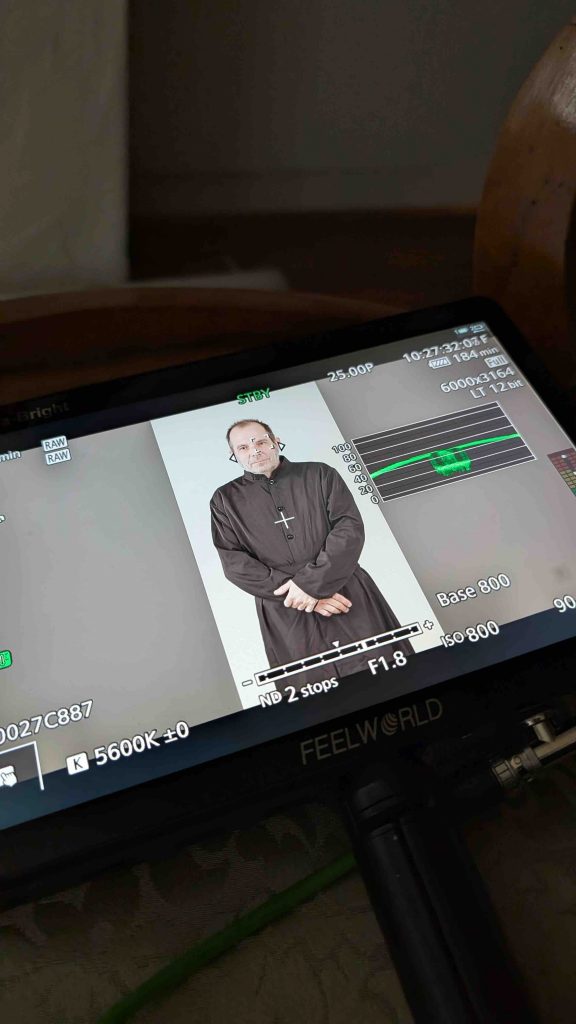
- The Data Capture: To train a realistic AI avatar, high-quality source material is everything. We captured high-fidelity video, an array of facial expressions, and complex lip movements.
A Delightfully Local Plot Twist…
While we utilized professional standards for the production, one of our favorite behind-the-scenes stories comes from the casting of Schloss Ritzen’s avatar, Bishop Berthold Pürstinger.
The actor who donned the heavy, 500-year-old religious robes was none other than Oliver Schuh-Dillinger, a key member of the Schloss Ritzen museum team. To add to the fun, his wife, Andrea Dillinger, happens to be the Director of the Museum Schloss Ritzen!
During the shoot, Andrea was managing her museum-turned-studio, and today, she gets to walk through her exhibition and see her own husband immortalized as an AI bishop answering questions for thousands of visitors.
Part 2: Fact vs. Folklore – Training Three Unique Digital Brains
Once the visual datasets were captured for our three actors, the technical work shifted from the physical studio to the digital sandbox. An avatar is only as good as its intellect, and because we were supplying three different museums, we had to build three entirely separate minds based on fundamentally different narrative concepts.
1. The Historical Eyewitness: Bishop Berthold Pürstinger (Schloss Ritzen)
As a real historical figure who authored influential theological works amidst the chaos of the uprisings, Berthold’s AI brain was fed rigid historical documentation. He speaks with the authority of a 16th-century man of the church, reflecting the hyper-local impacts of the 1525–1526 war on Saalfelden and the greater Salzburg area.
2. The Social Perspective: Maria (Kaprun Museum)
Unlike Bishop Berthold, Maria is a fictitious persona. The Kaprun Museum team intentionally designed her to give a voice to the women of the era. Her AI is trained to reflect the specific societal views, daily struggles, and unique hardships women faced during the Peasants’ War. Through Maria, history becomes empathetic and deeply human.
3. The Local Storyteller: Isidor Kheill the Night Guard (Vogtturm, Zell am See)
To give the Vogtturm’s avatar a personal touch, the museum directors invented Isidor Kheill, the tower’s vigilant night guard. While Isidor is a fictitious character, his persona is the ultimate vehicle for local lore. His AI brain is packed with historical tales, rumors, and gripping stories from around the region back in the day, making him an incredibly entertaining guide to the past.
Part 3: The Grand Rollout—May 2026 Launch Events
After months of parallel development, the grand project came to fruition through three separate opening events across the Pinzgau region. Each museum unveiled its specialized exhibition and AI companion to enthusiastic crowds:
May 8th, 2026: Schloss Ritzen Museum (Saalfelden)
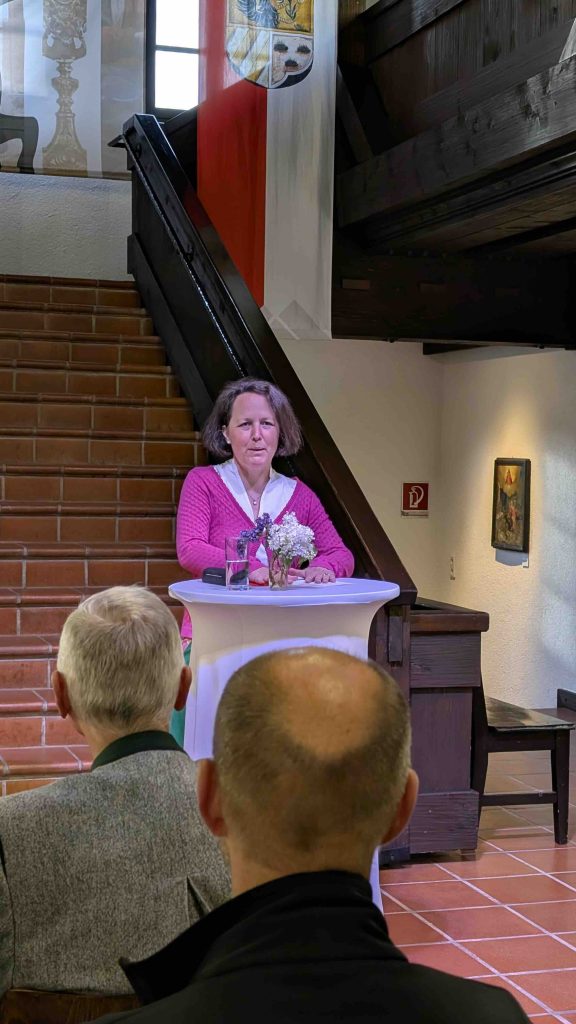
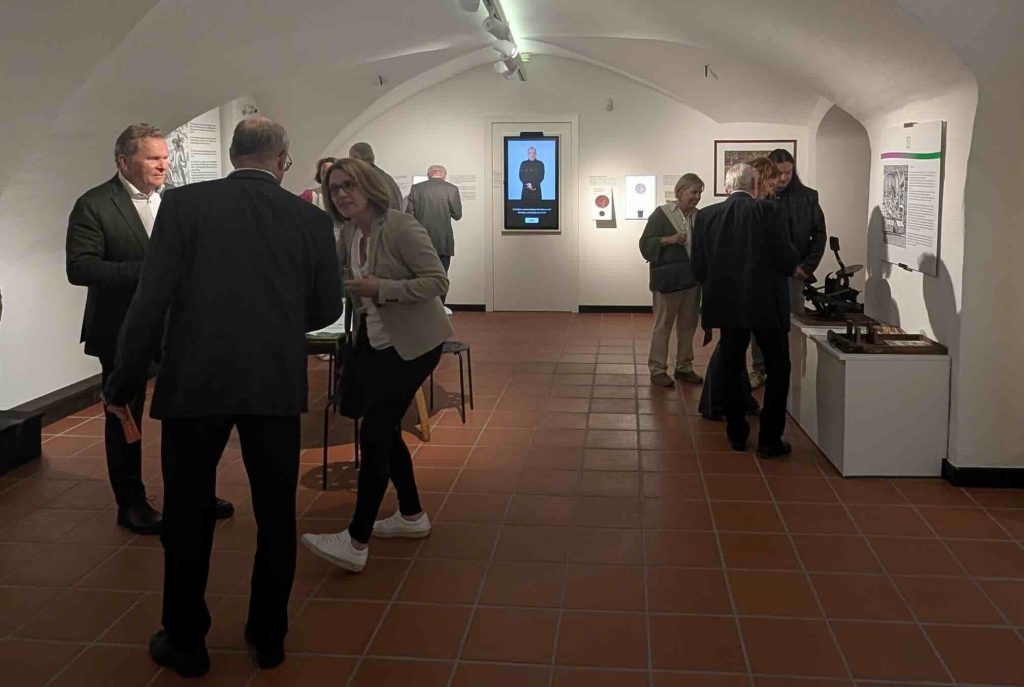
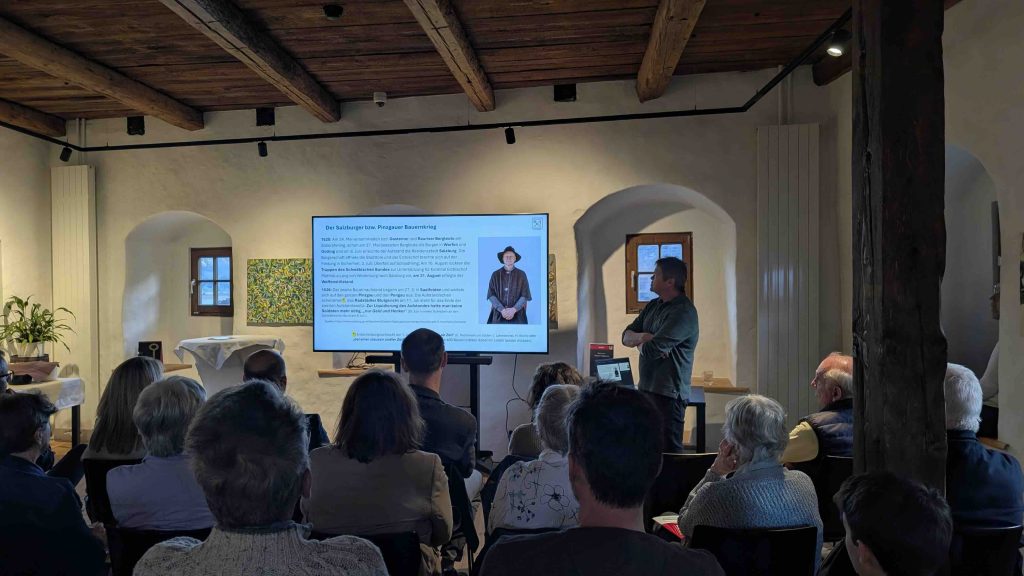
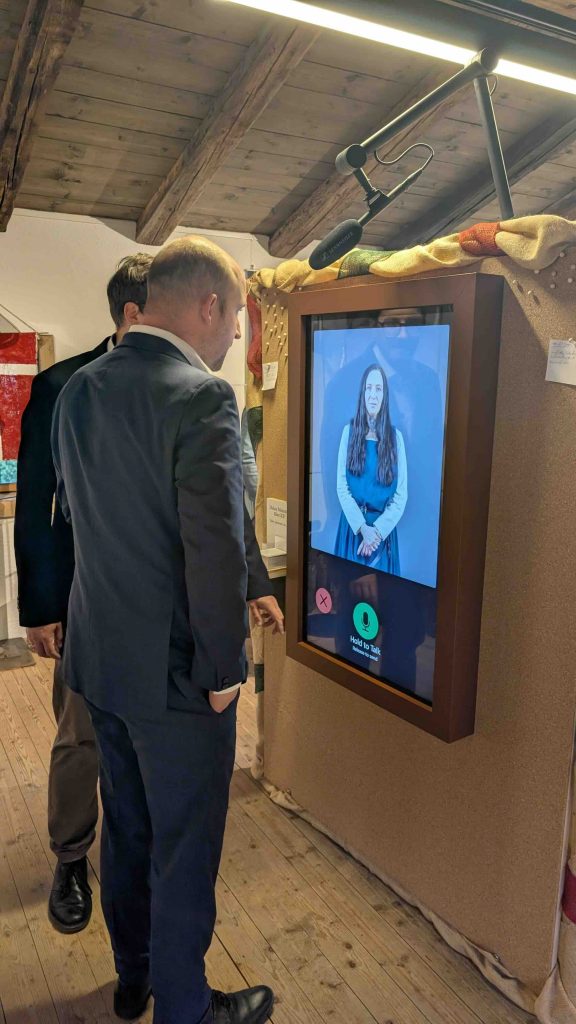
The regional rollout kicked off at Schloss Ritzen Museum in Saalfelden with the grand opening of the special exhibition, “All a Question of Religion” (Alles eine Frage der Religion). The debut of Bishop Berthold Pürstinger’s avatar was a success, drawing the local Mayor of Saalfelden, key political figures from Salzburg Land, and some prominent representatives from the Austrian museum sector.
May 13th, 2026: Vogtturm Museum (Zell am See)
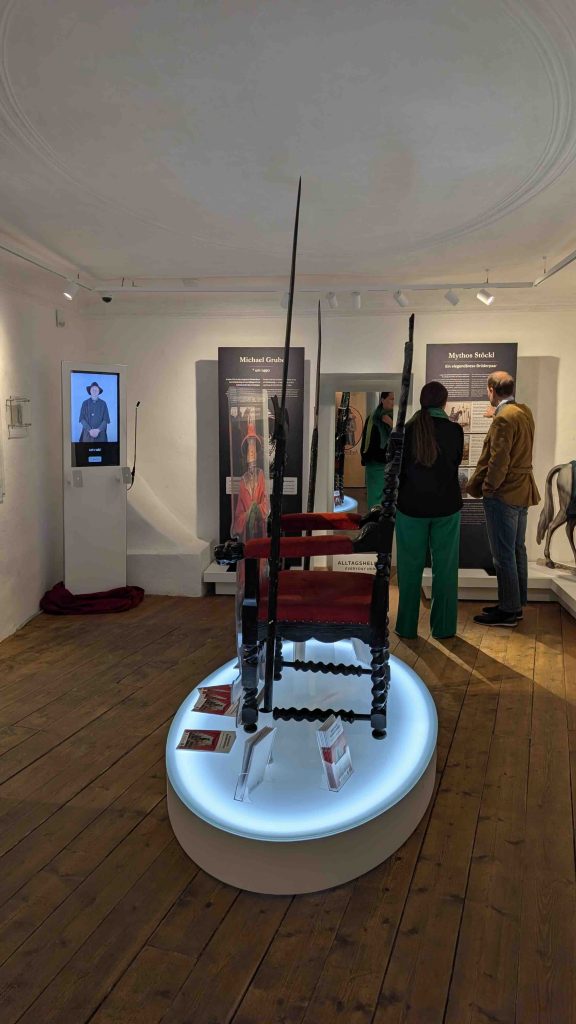
Just a few days later, the focus shifted to the Vogtturm Museum in Zell am See for the opening of the special exhibition, “Theater of Heroes (Hero Stories)” (Heldentheater (Heldengeschichten)). Here, visitors were introduced to Isidor Kheill the Night Guard, who quickly captivated the opening-day guests with his conversational tales and historical folklore.
May 20th, 2026: The Kaprun Museum (Kaprun)
The final piece of the regional trilogy was unveiled in Kaprun with the special exhibition titled “Storm and Retribution!”. The audience was moved by the launch of Maria’s avatar, celebrating the creative decision to highlight the vital social history of 16th-century women.
The Power of Shared Production
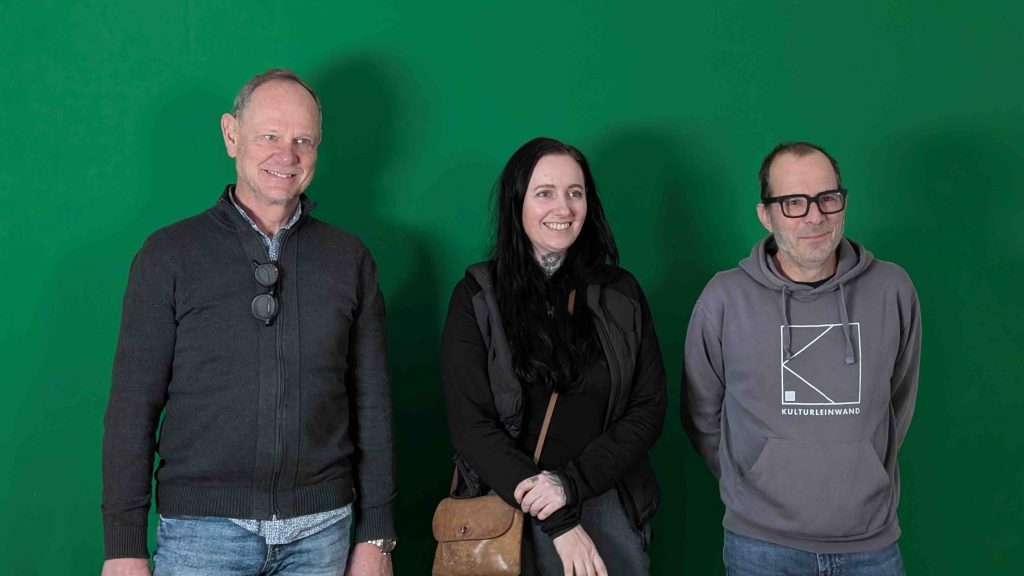
By pulling resources together for Schloss Ritzen, the Kaprun Museum, and the Vogtturm Zell am See, we proved that regional museums can leverage the latest technology innovation and production design when they collaborate. We didn’t just build an exhibition; we created an interactive, multi-perspective time machine for the Pinzgau region.