
Face-to-face with AI
Imagine stepping into a museum, not to read a dusty plaque, but to have a face-to-face conversation with someone who “lived” through a war 500 years ago.
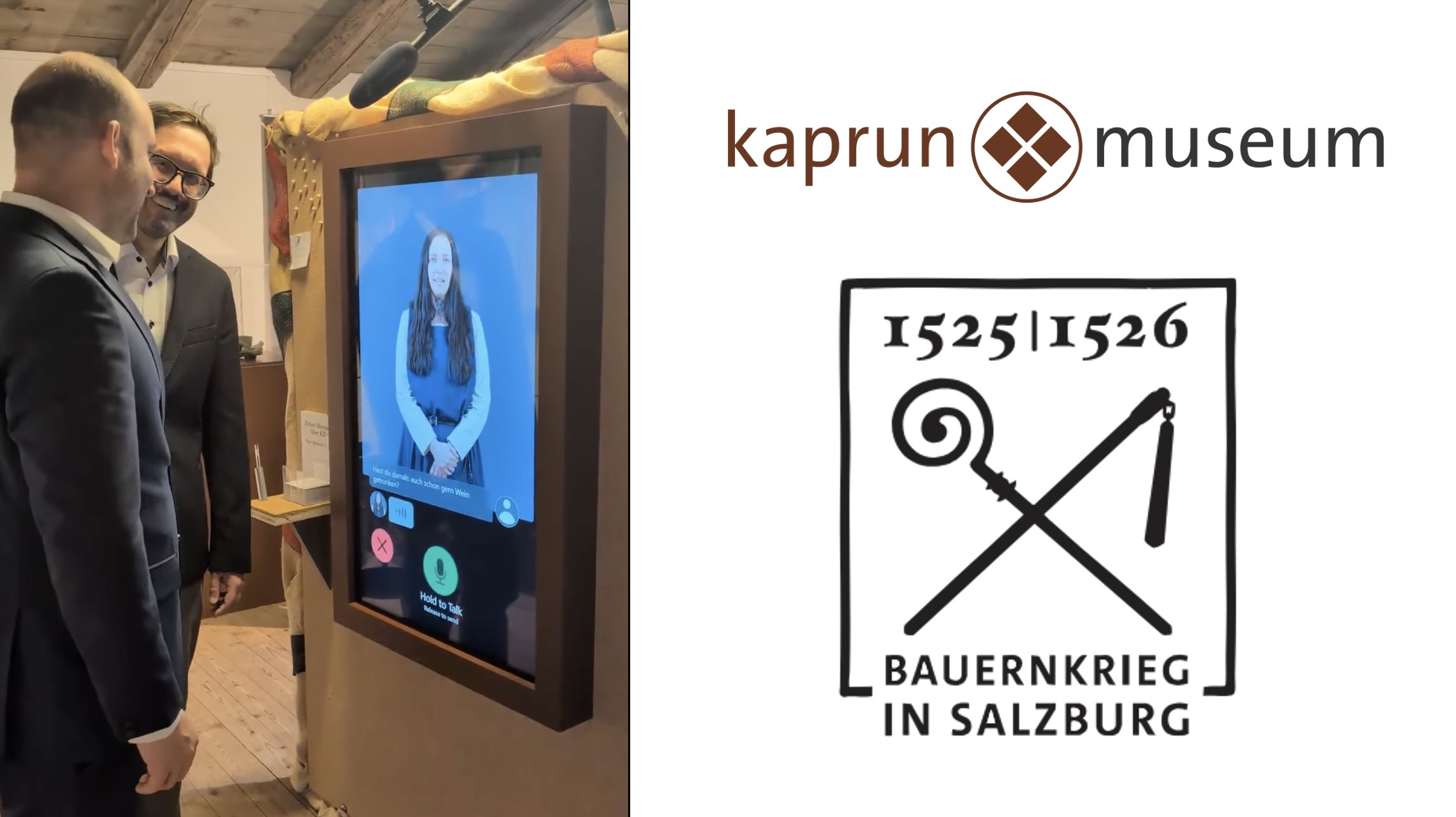
For the opening of a major new exhibition at the Kaprun Museum in Salzburg, Austria, we had the incredible opportunity to turn this concept into reality. By combining cutting-edge artificial intelligence with historical research, we created an embodied AI Video Avatar that bridges the gap between the year 1526 and 2026.
The Occasion: 500 Years since the Peasants’ War
The years 1525 and 1526 marked a period of massive social upheaval in Austria: the Salzburg Peasants’ War. Now, exactly half a millennium later, the Kaprun Museum has opened a special anniversary exhibition titled “Storm and Retribution!” While the exhibition features incredible physical artifacts, the museum team wanted a centerpiece that would make the human element of the war tangible—especially for younger generations who look for interactive, tech-driven experiences.
What is an Embodied AI Avatar?
If you’ve never seen an embodied AI avatar before, think of it as giving a highly advanced, historically accurate AI “brain” a human face and voice.
Instead of typing questions into a chatbot on a screen, visitors stand in front of a video display depicting a woman from the 16th century. They can speak to her naturally, and she responds instantly with realistic facial movements, voice modulation, and deep historical knowledge.
A New Way to Explore the Past
What makes this project so rewarding is how it changes visitor engagement. Instead of passively consuming information, visitors can lead their own historical investigation. They can ask the Avatar:
- “What did the war feel like for ordinary people?”
- “What was the specific role of women during the conflict?”
- “How did these events reshape our region?”
By answering these questions dynamically, the Avatar provides an educational experience that is both deeply informative and highly entertaining.
Transforming the Museum Experience
Museums are evolving, and the younger audience in particular expects technology to enhance how they learn. This project proves that AI doesn’t replace the physical museum experience – it amplifies it. It sparks curiosity and encourages visitors to explore the rest of the physical exhibition with a much deeper understanding of the human stories behind the artifacts.
If you happen to be in the Salzburg region over the coming weeks, we highly recommend visiting the Kaprun Museum to experience the “Storm and Retribution!” exhibition and chat with the Avatar yourself.
What do you think about the future of AI in cultural spaces? Would an interactive avatar like this make you more excited to visit a historical exhibition? Let us know your thoughts in the comments below!
